

By Ahmed Aminu-Ramatu Yusuf
Religion in Nigeria has been negatively politicised and politics itself has been harmfully religionised. These have been by those who control and manage state-power. Religion has been employed to disorganise, demobilise, disunite, and atomise the struggles of the popular masses for democracy and development.
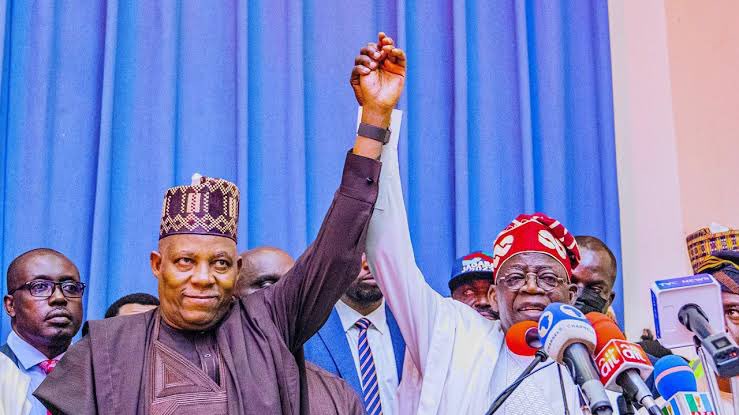
Attempts to break this tradition in 1992 was subverted by the military despots. Since then, harmful religious politics has been reinforced by politicians. This was brought to play in the 2023 presidential elections, when the then presidential candidate of the All Progressives Congress, Bola Ahmed Tinubu, a Muslim, choose another Muslim, Kashim Shettima, as his running mate.
Politicians and clerics in 2023 organised political discos around the “Muslim-Muslim” ticket. These were especially staged in the North and Middle Belt. But the Muslim clerics were largely in the forefront. The concept of the “Muslim-Muslim ticket” was birthed by them, despite the fact that Tinubu and Atiku Abubakar, the rival Peoples Democratic Party presidential candidate, are Muslims.
The politics did not succeed, as the then President Muhammadu Buhari, by his initial opposition to Tinubu’s candidacy, compelled a lot of people to support the latter.
They supported Tinubu not because they liked him but because Buhari and his diehard supporters were apparently for Atiku. Besides, common sense dictated that “the enemy of my enemy is my friend.” So, they campaigned for Tinubu, and he won.
Most Northern or “Arewa” Muslim clerics deliberately ignored the banditry, terrorism, and violence that the Buhari administration tolerated, encouraged and promoted. They also underestimated the determination of Tinubu to fight them naira-for-naira, and dollar-for-dollar.
But, while the “Arewa” politicians ignored the realities on the ground, the politically dormant Hausa people remembered. As such, unlike in times past when they sheepishly followed their clerics and voted as directed, in 2023 the Hausa masses went for a split, voting more for Tinubu.
Come 2027, religion will again be politicised and politics will be religionised. Politicians and their DJs (religious clerics) will organise political discos around and about religion in order to get votes. But the masses will refuse to dance to their music.
The voters, with their votes, will tell the politicians and their errant clerics that humans must first eat, have shelter, and clothing, before they can practice religion. The primary concern of the masses will fundamentally be the security of life, movement, and property. The protection of their lands, survival of their ethnic groups, and the improvement of their material conditions and wellbeing would equally be their primary concerns.
In the South-West geopolitical zone, religious politics have never been an issue of concern. This is because the Yorubas strongly believe and adhere to the axiom that there is no compulsion whatsoever in religion; and that everyone is responsible and accountable for his or her actions to ALMIGHTY GOD.
The Yorubas also hold that only GOD knows who is truly worshipping Him, and who is merely paying lip service. Therefore, how you treat your fellow human beings is what concerns them, and not your religion. Consequently, only chronic lunatics and fanatics will go about trying to impose their religious point of views on other people.
In the South-South, religion will not play any key role in the 2027 presidential elections. This would be despite the fact that clerics will try to use it in convincing their congregations to vote for their preferred candidates.
In the South-East, which is predominantly Christian, with pockets of Muslims, religion will influence the state and National Assembly elections. However, ethnic identity is what will count most there.
It is in the North and Middle Belt that clerics, especially the Muslim ones, will go about generally politicising religion. Despite this, the masses will not agree, in the words of Vladimir Lenin, to be, “the foolish victims of deception and self-deception in politics.” Yes, they might not clearly identify their underlying class interests, but they will, as Lenin once said, “seek out the interests of some class or, other behind moral, religious, political and social phrases, declarations and promises.” Religious politics will generally be relegated to the background in the 2027 elections in the North and the Middle Belt.
With the Fulani terrorists massively slaughtering worshippers in mosques and churches, killing traditional rulers, kidnapping for huge ransoms, raping women, destroying farms, invading and shooting indiscriminately in markets, why should the people succumb to deceptive politics conceived by retrograde politicians and clerics?
Why should the indigenous peoples in the North and Middle Belt make religion an issue when their peoples – including babies, children, pregnant women, and the elderly – could be set ablaze in the vehicles they are traveling in by well-known terrorist groups? Have the terrorists not been known to commit genocide, infanticide, cannibalism, and crimes against humanity?
They will tell themselves that they will be cursed by ALMIGHTY GOD if they capitulate to religionism, when hundreds of their communities, villages, and towns have become ghosted. When millions have been turned into refugees, countless children are out of school, and their villages occupied by terrorists who also install their own kings!
With which ears will the Hausas and ethnic minorities listen to the campaign promises of Fulani politicians and clerics who share the same ethnicity with people perpetrating the terrorism, genocide and crimes against humanity and refuse to condemn them?
How does anyone expect the people of Benue State, for instance, to listen their governor and other prominent politicians, who virtually kept mute or rationalised the Yelewata genocide?
Didn’t Buhari refuse to officially declare these actors as “terrorists” because they are from his ethnic group? Did he not, on many occasions, rationalise terrorism? Did Buhari not grant amnesty to Boko Haram terrorists, feed, cloth, pamper and even pay them, while totally ignoring the terrorised, terrified, and displaced in the Internally Displaced Peoples’ (IDP) camps?
Didn’t Sheikh Ahmed Gumi, a Fulani cleric, angrily warn people in the North, during the 2023 presidential election, not to elect any candidate who will neutralise the terrorists? Did he not say: “Don’t vote for politicians who will attack, kill bandits; they‘re our warriors in forests”? Did he not boast that: “Recent terrorists attack is a tip of the iceberg unless Nigerian Government negotiate with bandits”?
Do all these not corroborate the statement of a Fulani terrorist that some people in government are behind the terrorism? He had said: “I swear to the Almighty God that the government is the one arming us. We Fulani don’t know guns. We only know cows and how to rear cows. Cows don’t give birth to guns. I swear to God, we just sat down and were supplied AK47 by the government. I am not afraid to say the truth.”
With all these kidnappings, banditry, terrorism, genocide, why would we expect the Hausas and the ethnic minorities in the Middle Belt to succumb to the politicisation of religion and religionisation of politics in 2027?
But there are even far more concrete reasons why the politics of security, survival and well-being, will supersede, override, and cancel the destructive politics of religion in the North and Middle Belt of Nigeria. These will unfold as time goes.
Ahmed Aminu-Ramatu Yusuf worked as deputy director, Cabinet Affairs Office, The Presidency, and retired as General Manager (Administration), Nigerian Meteorological Agency, (NiMet). Email: [email protected]
Discover more from Keeping Them Honest
Subscribe to get the latest posts sent to your email.